When moving into or out of a home, it’s easy to focus on packing boxes, lifting furniture, and making deadlines. But one detail often gets overlooked: protecting the floors.
Moving day is tough on floors. If you’re renting and want to make sure your deposit comes back, or if you own your home and want to avoid repair bills, protecting your floors is a smart move. Furniture edges, heavy gear, and all that foot traffic can leave marks you didn’t expect. Renting floor protection gives you an easy, affordable way to keep your floors in good shape while everything else is in motion.
Why Floor Protection Matters When Moving
Moving involves foot traffic, sliding furniture, and sometimes wheeling in large appliances. Flooring can take a beating. Hardwood, vinyl, and tile are all vulnerable in different ways, and even durable surfaces can show signs of wear when exposed to high stress for a short time.
Temporary floor protection creates a barrier between your floors and the moving process. It reduces the risk of damage from:
- Dirt and debris tracked in on shoes
- Moisture from rain or snow
- Heavy equipment like dollies and carts
- Dropping or dragging items such as boxes or furniture
It’s not just about looks, either. Scratches and dents can reduce a home’s value while also creating extra expenses if the damage needs to be repaired later.
Related Article: How to Protect Floors When Moving
Rental Options for Floor Protection
Not every move requires the same protection. That’s why, if doing the move yourself, renting floor protection is the way to go—not buying.
Here are some common floor protection products available for rent:
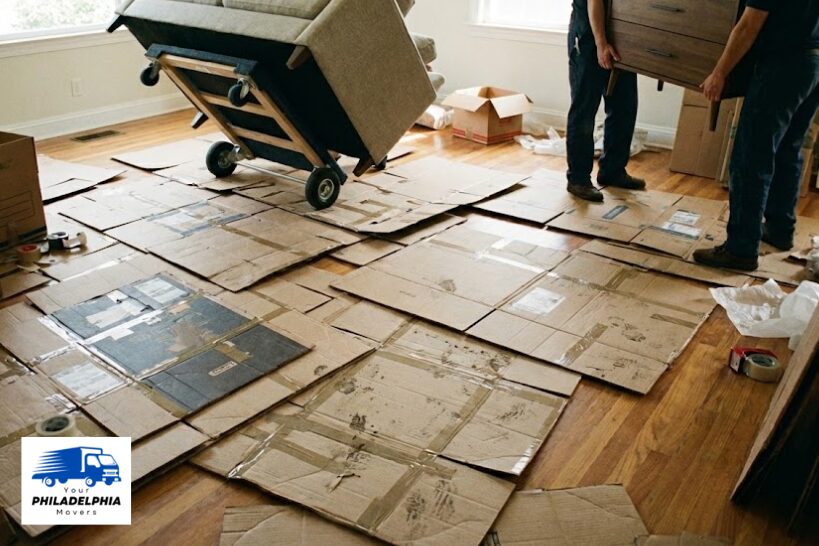
- Cardboard Sheets: Ideal for hardwood or vinyl, these are rugged enough to stand up to foot traffic but flexible enough to lay flat without tape. Many are made from recycled material and can handle most standard moves.
- Adhesive Films: Often used for carpet, these stay in place well and shield floors from dirt. They’re clear, easy to apply, and can be cut to fit specific areas.
- Surface Protection Boards: Made with thicker materials, these boards handle heavy equipment and repeated use. They’re especially useful when you’re moving large items across sensitive surfaces.
- Rubber Matting or Runners: Useful in hallways and entryways, rubber mats offer slip resistance and heavy-duty protection. They’re made for high-traffic areas and hold up under serious wear.
Most moving companies or equipment rental services offer these items for daily or weekly rental. Renting allows flexibility. You use the products during the move and return them when you’re done—no storage, no waste.
If you’re interested in renting floor protection, contact your local Philadelphia moving company first.
Quick Tips for Using Floor Protection While Moving
Protecting your floors doesn’t need to be complicated. A few simple steps can go a long way.
- Measure the areas you need to cover before picking up materials.
- Focus on high-traffic zones like entryways, hallways, and rooms where furniture will be staged.
- For tile or vinyl flooring, avoid materials with strong adhesives that may damage the finish.
- Use corner guards or padding in tight areas to keep walls and baseboards safe, too.
- Clean floors before applying temporary protection to help it stay in place and avoid trapped debris.
When setting down protective layers, make sure edges are taped or weighed down to avoid tripping hazards. Pay special attention near door thresholds and stairways.
Floor Types and the Right Protection
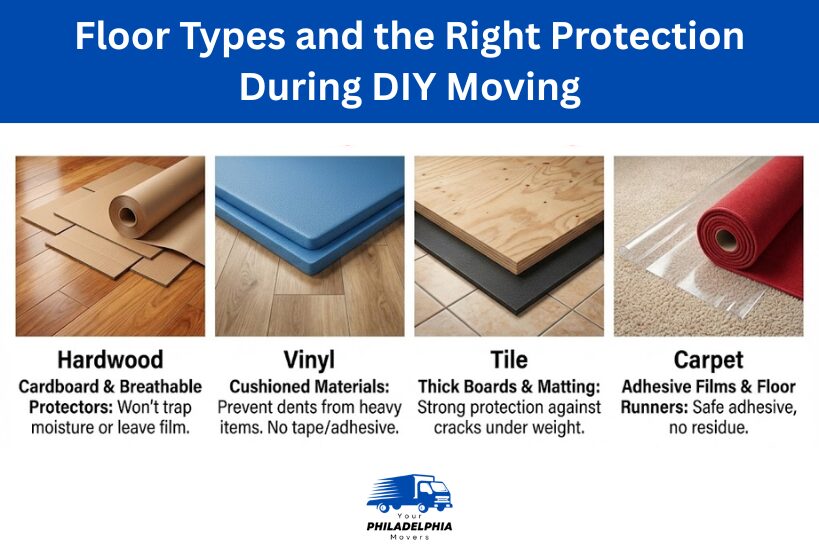
Not all floors handle moving day the same way, so it’s important to choose the right kind of floor protection for each surface.
Hardwood
Hardwood floors do best with cardboard or breathable surface protectors that won’t trap moisture or leave behind a film. These materials add a layer of protection without affecting the finish.
Vinyl
For vinyl, cushioned materials help prevent dents caused by heavy furniture or equipment. It’s also a good idea to avoid any tape or adhesive that might peel or damage the surface.
Tile
Tile is more durable, but it’s still prone to cracks under weight. Thick boards or matting offer strong protection when you’re moving heavy equipment or large furniture across it.
Carpet
Carpeting benefits from adhesive films or floor runners. Just make sure the adhesive is safe to use and won’t leave behind any sticky residue after the move.
Using the right floor protection for the type of flooring in your space makes a big difference. It helps prevent damage during your move and keeps things simple when it’s time to clean up.
Don’t Forget About the Weather
Depending on which time of year or which day you move, rain, snow, or mud can make any move messier—and a lot harder on your floors.
If you’re moving in winter or during a rainy stretch, having a durable floor covering makes a big difference. Wet shoes and soggy cardboard can quickly turn into marks on hardwood or stains on carpet. Rentals give you the flexibility to add coverage only when you need it—without buying extra supplies you’ll never use again.
Related Article: When is the Best Time to Move?
Keep Your Floors Safe So You Can Focus on the Move
A move is stressful enough without adding damaged floors to the list. Renting floor protection products is a small step that can save time and money down the line. It gives you peace of mind and keeps the flooring in good shape for landlords, future buyers, or just your own satisfaction.
Skip the damage. Invest a little time in finding the right floor protection rental and protect the surfaces that support everything else in the house.